

As a professional storyteller, I found this episode of our Two Steps Forward podcast particularly engaging. I once thought I understood the basics: Make it accurate, make it relevant, make it human.
Then my co-host Solitaire Townsend and I discussed her new novel — a work of “cli-fi” (climate fiction). And she sharpened the lesson for me in ways that everyone working in sustainability communications would be wise to heed.
In this episode, we talked about her remarkable new novel, Godstorm — but the most useful part of the conversation wasn’t about the book’s alternative Roman Empire or its sword-wielding heroine. It was about what writing fiction taught her about what makes any story actually work. (Godstorm is currently sold in hard copy only in the U.K. and Australia; it is available in the U.S. as a Kindle e-book.)
Solitaire’s biggest takeaway is deceptively simple: Stories are not about issues. They are about people — not systems, trends, frameworks or even impacts.
People.
That sounds obvious, until you look closely at most sustainability communications. We routinely aspire to tell stories when we’re actually merely presenting information: emissions trajectories, regulatory developments, technology roadmaps, ESG metrics.
All are important. Most are necessary. And little of it, on its own, is storytelling.
An emotional journey
As Soli put it in our conversation, a real story is an emotional journey — someone starts in one place and ends in another, changed by what happens along the way. If no one changes, if no one struggles, if no one feels conflicted or afraid or hopeful or determined, we’re not telling a story. We’re delivering content.
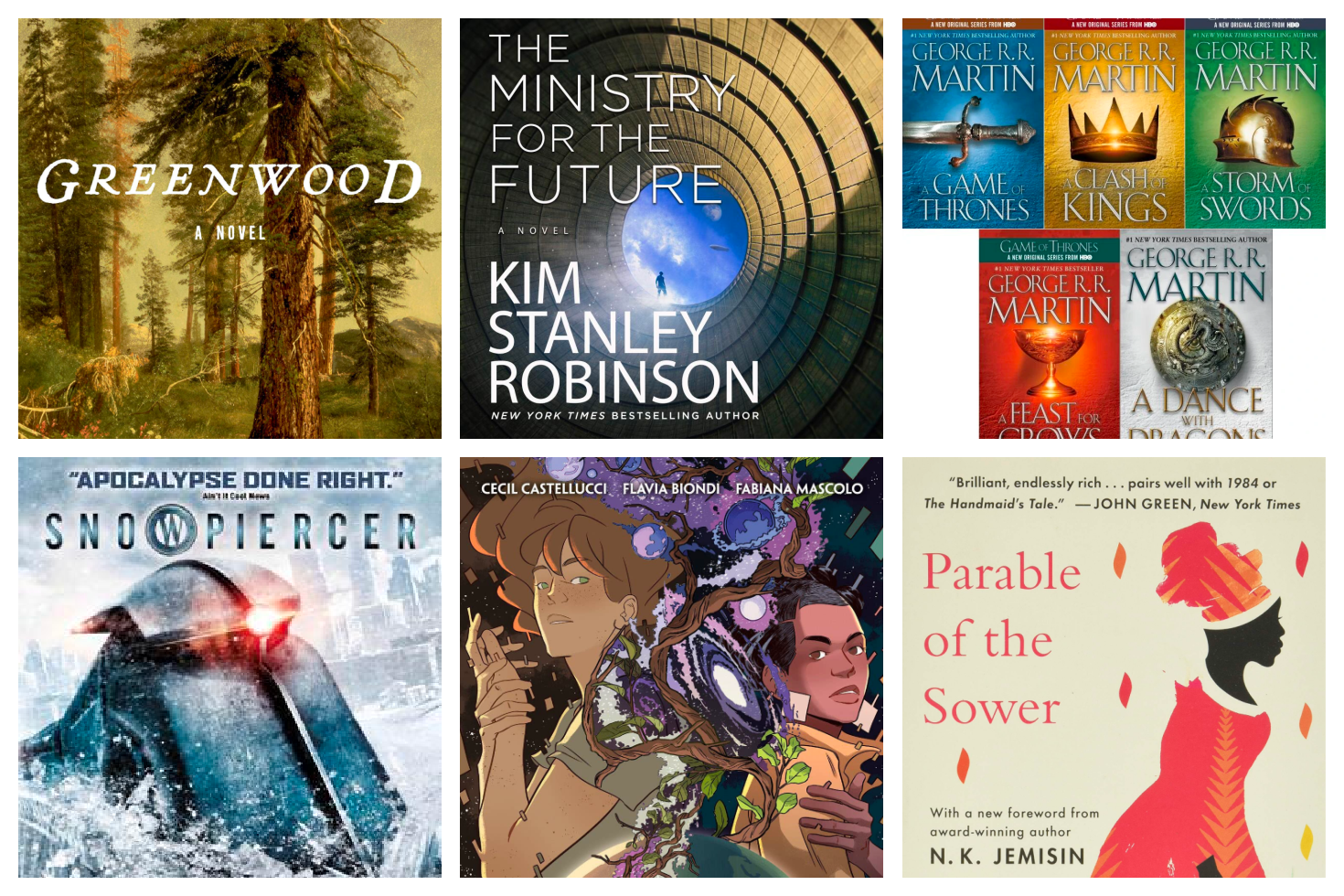
It’s a truth long understood by the best climate fiction writers — from Neal Stephenson’s sprawling, systems-level futures to Kim Stanley Robinson’s deeply human portraits of people living inside planetary change. What makes their work resonate isn’t the science (although it’s rigorous), but the fact that we experience it through characters we come to know and care about.
She shared an example that should be required listening for anyone working in climate, health or policy communications. She recently trained medical professionals in the Global South who were deeply knowledgeable about climate-related health impacts, i.e., heat stress, asthma, air pollution and other mortality risks.
They had the data. They had the charts. They had the statistics. And none of it landed.
Then she asked them to tell the story of one patient. A child with worsening asthma who lived beside a busy road. A worker admitted multiple times for heat exhaustion. Voices broke. Emotion surfaced. Attention sharpened. The same facts, suddenly unforgettable.
Earning attention
That’s the gap we still haven’t closed in sustainability. We talk endlessly from our heads — science, economics, technology, risk. But the connection to hearts — bodies, families, dignity, fear, love, identity — is often treated as optional or manipulative or “too soft” for serious discourse. It isn’t. It’s the connective tissue that makes any of the rest of it matter.
There’s another lesson here that’s equally important: Attention is earned. People don’t owe us their focus simply because climate change is an urgent and existential threat. If we want attention, we must offer something in return — narrative, tension, character, emotion, meaning. That’s as true for a podcast, a Trellis article, a corporate sustainability report or a government climate strategy.
And perhaps the most encouraging insight of all: Storytelling is not a gift bestowed at birth. It’s a skill, and it can be honed. Soli talked openly about spending years studying craft — reading, taking courses, rewriting, learning the rules before learning how to bend them. (Helpfully, she holds two master’s degrees: in sustainability and Shakespeare.)
That’s good news. It means every sustainability professional, every journalist, every communicator — everyone — can improve at this.
If sustainability is going to prevail in a time of backlash, fatigue and fragmentation, we won’t get there with more data or factual narratives. We’ll get there through a storm — not of outrage, but of stories: human stories, told well.
The Two Steps Forward podcast is available on Spotify, Apple Podcasts, YouTube and other platforms — and, of course, via Trellis. Episodes publish every other Tuesday.
