


Just over a decade or so ago, streaming was so innovative and exciting. It provided relatively inexpensive and highly convenient access to seemingly endless libraries of movies and shows, all within reach if you had a phone, tablet, or TV connected to the internet. Now, amid a sea of changes within the industry and fewer differences between the streaming model and the one it replaced, it’s time to pull the plug.
Streaming is simply not worth it. It needs to die and that begins with unsubscribing; there’s no cord to cut, after all. Here’s why it’s time to pivot.
Subscription prices continue to rise
Streaming services are too costly

A major reason why it’s worth looking at other means to acquire your entertainment is that the streaming services continue to raise their prices. Netflix recently announced another price hike for American subscribers, and it seems like every few months one of the major services increases prices by claiming it’s vital if they want to keep providing quality content. As Warner Bros. and Paramount merge, subscribers can expect a price hike for those catalogs sooner or later as well, despite the likelihood of the acquisition costing many people their jobs.
A low price was a huge selling point for Netflix and others for many years. It was a cheaper alternative to cable, where packages could exceed $100 every month. And cable came with commercials. But like most modern innovations, once streamers killed the cable model, they realized the cable model was good at making money instead of losing it. The major streaming services have kept prices relatively cheap enough for long enough, so that cable companies have had to drastically change their approach or die out. And as Netflix and its followers became behemoths of the entertainment industry, they started to revert to that model of charging high prices. And of course, returning to ads and commercials.
Ads are everywhere and can’t be stopped
Commercials and product placement ruin streaming

It’s increasingly hard to escape ads and commercials on streaming services, and it’s only going to get worse. Again, streamers tempted viewers with commercial-free, continuous viewing, only to slowly introduce more and more ads over time until you can’t really tell the difference between the past and the present.
Amazon is the biggest culprit with ads, and it will likely be the leader in making the streaming experience completely miserable. If you subscribe to an ad-supported tier, you can expect commercials before movies and during shows. It will become more intrusive, as Amazon wants to integrate more of its products and services and put you closer to its shopping cart in its marketplace. The pause screen will be a battlefield as that is an ideal location to put ads, especially ones that are clickable and shoppable. Amazon wants to keep you in its ecosystem for as long and often as possible.
You can avoid commercials with the ad-free experience, but each service has a different idea of what ad-free really is. Both Disney+ and Amazon still promote content on its platform after you press play, but allow you to skip such trailers. The problem is that they don’t want you to subscribe to ad-free tiers. Streamers make a lot more money when you pay less to subscribe, because they make up the difference with advertisers. It’s better for them when they have the opportunity to sell you stuff.
Story quality is questionable amid copycats
Content is dictated by algorithms and trends
When you consider the high prices and avalanche of ads, as well as the invasion of privacy, you would expect what you’re receiving in return to be something special. While there are still standout titles in various libraries, including in the deep catalog Netflix wields, the average title is at best mediocre. Measuring quality feels like a bell curve, except the middle of the curve keeps moving lower. Most shows are no longer good; they’re fine or familiar or entirely forgettable.
You can spot it in libraries as every streamer service leaps on to a popular genre or style and puts out related titles until everyone is so exhausted by it. For example, Netflix, Apple TV, and Prime Video keep pushing out variations on the murder mystery genre as well as the domestic thriller. That’s why there are so many shows with the word “lies” in the title. These shows run six to eight episodes, feature a notable celebrity or two, and proceed to really do nothing innovative or even sensible.
Streaming services basically copy one another. There are countless Euphoria clones: Tell Me Lies, We Were Liars, and the reboot of Pretty Little Liars. And murder mysteries keep coming trying to emulate the success of Knives Out.
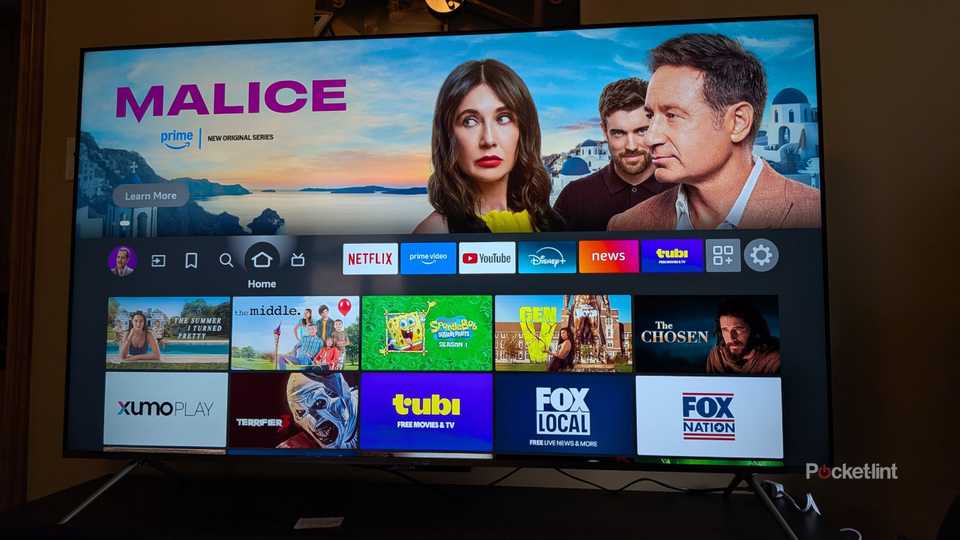
Amazon Prime recently put out The Girlfriend and Malice, Apple TV+ has Imperfect Women and The Last Thing He Told Me, while Netflix has His and Hers, Sirens, The Perfect Couple, and many more. There are all variations on the same idea, where someone in your family or friend circle has a secret, and it’s quite easy to get them confused. Some of them are much better than others, but there isn’t really a top-notch drama in there. There is nothing as good as Big Little Lies.
This is what you can expect moving forward. When one show breaks through, there will be clones as soon as possible, and none will be be as impressive as what they’re trying to copy. So don’t worry if you unsubscribe, you’re not going to miss too much.
Libraries constantly change
Access does provide ownership

It’s worth remembering that catalogs change, libraries add and remove titles, and nothing is under your control. Your subscription grants you access to the service, but it does not guarantee what’s on the service. And it definitely doesn’t give you ownership. If you subscribe to Netflix, you’ll have access to most Netflix originals but not every single one. What’s claimed as an original may depend on your region and licensing agreements that may have an expiry date. That’s why older Netflix originals may have disappeared while others move around the services.
It’s all a bit complex. The Knives Out franchise is somewhat synonymous with Netflix, but the original movie was theatrically released and owned by another company. Netflix bought the rights to the sequels, two well-received and highly promoted films. It feels retroactively like the first film was a Netflix movie, but it’s not.
Catalogs regularly change, and even if titles don’t disappear from the library, many get buried over time as services push you to watch what’s new. Physical media is the only way you can ensure you own an actual piece of entertainment, and one that isn’t going to be changed or altered. Streaming services may edit live shows, remove offensive episodes, or altogether postpone planned releases based on the cultural and political climate at the moment. All of that means nothing is guaranteed when you log in.
Compression diminishes video quality
Streaming compromises details and fidelity

The premium streaming service tiers offer 4K resolution and top HDR formats, with options for spatial audio and Filmmaker Mode. But you’re never going to get the highest quality version of any show or movie, and that’s because you’re streaming. Files are simply too large, and in order to access a vast library quickly and easily, files are compressed, and details are lost.
For those that care about cinematic fidelity and really want to get the most out of their high-end smart TV and audio setup, you need to move away from streaming. Some services are better than others, but there is a ceiling to the quality you’ll get when you stream versus when you invest in 4K Blu-ray discs and other physical media. If you really want to see what the creators wanted you to see, you need to unsubscribe.
