


Programmable DNA nanostructures could help move stroke care beyond emergency reperfusion toward targeted brain repair, but the field still faces major safety and translation hurdles.
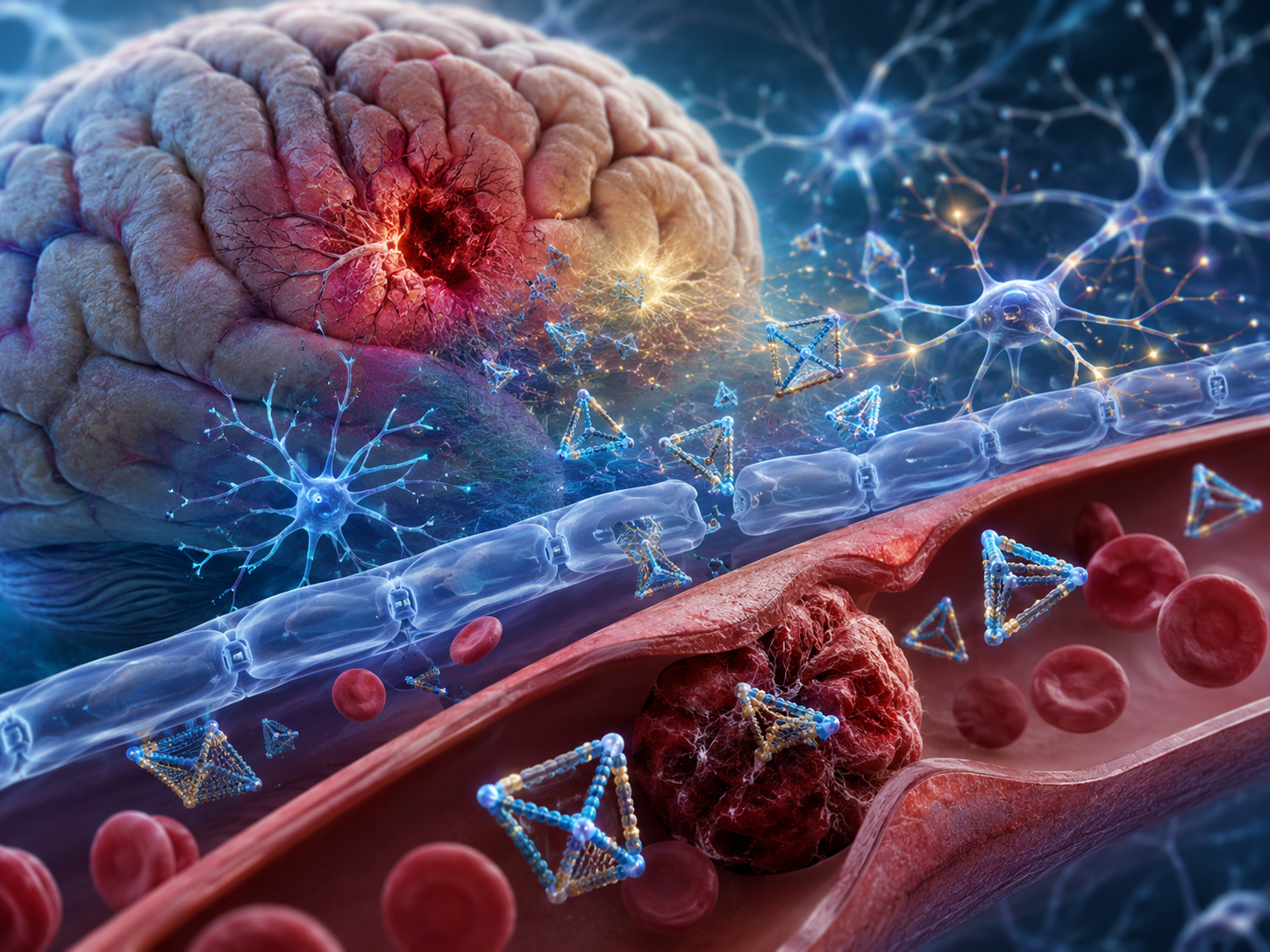
Paper: Prospects of DNA nanotechnology in stroke repair and regeneration. Image credit: AI-generated image created using ChatGPT/OpenAI
A recent review published in the journal Communications Biology examines how deoxyribonucleic acid (DNA) nanotechnology could help overcome key therapeutic limitations by enabling targeted drug delivery, controlled therapeutic release, real-time imaging, and tissue regeneration.
The authors highlight recent advances in programmable DNA nanostructures that may cross the blood-brain barrier, reduce inflammation, promote neural repair, and support precision medicine in experimental and preclinical settings. Together, these developments position DNA nanotechnology as a promising platform for next-generation stroke therapies.
DNA Nanotechnology Addresses Critical Gaps in Stroke Therapy
A stroke occurs when a blood vessel that is blocked or ruptured disrupts blood flow to the brain. The resulting oxygen shortage rapidly damages brain tissue, triggering neuronal death, oxidative stress, inflammation, disruption of the blood-brain barrier, and tissue degeneration. Treatments such as thrombolytic drugs and mechanical thrombectomy can restore blood flow and improve patient outcomes. However, these interventions must be administered within a narrow therapeutic window and do little to repair damaged brain tissue.
DNA nanotechnology offers a promising strategy to overcome these limitations. Unlike conventional nanoparticles, DNA nanostructures self-assemble into precisely defined shapes and sizes that researchers can easily program for specific functions. Researchers can also engineer these nanostructures to carry drugs, ribonucleic acid (RNA) molecules, gene-editing systems, and imaging agents, although their long-term safety, immune effects, and in vivo stability still require further study.
Research on DNA-based nanotherapeutics has expanded rapidly over the past decade, producing a wide range of platforms for neurological applications. This review brings these advances together by examining progress in targeted drug delivery, neuroprotection, molecular imaging, biosensing, regenerative medicine, and gene regulation. It also identifies key challenges that continue to limit clinical translation, including improving biological stability, developing scalable manufacturing methods, and establishing long-term safety.
DNA Nanostructures Demonstrate Broad Therapeutic Potential
The review highlights several classes of DNA nanomaterials with promising applications in stroke therapy. Among them, tetrahedral DNA nanostructures (TDNs) stand out because of their structural stability, efficient cellular uptake, and favorable biocompatibility. Experimental studies show that TDNs can cross both healthy and damaged blood-brain barriers, making them promising carriers for neuroprotective therapies.
Other DNA nanostructures offer complementary advantages. DNA origami enables researchers to build complex two- and three-dimensional architectures for controlled drug loading and stimulus-responsive release. Some DNA nanocages and tetrahedral DNA platforms have demonstrated blood-brain barrier penetration or brain-delivery potential in experimental models, while DNA hydrogels provide sustained drug release and support tissue regeneration. Researchers have also developed dynamic DNA walkers and programmable nanodevices for responsive drug delivery.
The review also highlights the growing role of DNA nanotechnology in diagnosis and disease monitoring. Researchers have combined DNA nanostructures with fluorescent probes, radionuclides, and molecular recognition elements to improve stroke diagnosis and monitor disease progression. They have also engineered programmable DNA carriers to deliver small interfering RNA (siRNA), microRNA (miRNA), and aptamers that regulate genes involved in inflammation, oxidative stress, and neuronal survival.
Multiple Mechanisms Drive Therapeutic Benefits
DNA nanostructures offer a multifunctional platform for stroke therapy. They can target several biological processes involved in disease progression, including oxidative stress, inflammation, gene regulation, and neuronal survival. This broad therapeutic activity distinguishes them from many conventional treatments.
Studies highlighted in the review show that tetrahedral DNA nanostructures (TDNs) protect brain tissue by modulating key signaling pathways, including TLR2-mediated inflammatory signaling. They reduce neuronal apoptosis, suppress pro-inflammatory cytokine production, and encourage inflammatory astrocytes to adopt neuroprotective phenotypes. These combined effects may help preserve neurons and create a more favorable environment for brain repair after stroke.
The ability to cross the blood-brain barrier gives some DNA nanostructures a significant advantage over conventional drug delivery systems. These programmable carriers could transport neuroprotective drugs, RNA therapeutics, proteins, and gene-editing systems directly to the brain. Their programmable targeting and cargo-loading capacity could improve treatment efficiency and reduce off-target effects, although this remains to be validated clinically.
DNA nanotechnology supports advanced diagnostic and regenerative applications. Stimulus-responsive nanostructures release therapeutic agents only under disease-specific conditions, such as elevated reactive oxygen species or acidic pH, improving therapeutic control. DNA-based biosensors may help detect microRNAs, exosomal biomarkers, and other molecular signals, supporting earlier diagnosis and closer monitoring of stroke recovery.
DNA origami provides exceptional structural precision and high drug-loading capacity, while DNA hydrogels support sustained drug release and tissue regeneration. DNA nanocages show promise for targeted delivery, whereas tetrahedral DNA nanostructures currently show particularly strong potential for neurological applications because they combine simple fabrication, favorable biocompatibility, efficient cellular uptake, and consistent therapeutic performance in preclinical studies.
Shaping the Future of DNA Nanomedicine
DNA nanotechnology could help reshape future stroke treatment strategies by combining diagnosis, targeted therapy, and tissue regeneration within programmable nanoscale platforms. DNA nanostructures target the biological processes responsible for long-term neurological damage. Some are being engineered to deliver therapeutic molecules across the blood-brain barrier, regulate inflammation, reduce oxidative stress, promote neuronal survival, and support tissue regeneration. This multifunctional approach offers a more comprehensive strategy for stroke management.
Despite these promising preclinical advances, several challenges still limit clinical translation. Researchers must improve the resistance of DNA nanostructures to enzymatic degradation, achieve predictable biodistribution, minimize immune responses, and develop scalable manufacturing methods. They must also establish robust quality control standards and demonstrate long-term safety before these technologies can advance to widespread clinical use.
Future research will focus on developing hybrid DNA nanomaterials with greater structural stability and therapeutic performance. Integrating DNA nanotechnology with RNA therapeutics, advanced imaging systems, and stimulus-responsive materials could enable highly personalized stroke treatments. Advances in scalable manufacturing will also play a key role in accelerating clinical translation.
Overall, DNA nanotechnology has emerged as one of the most versatile platforms in regenerative nanomedicine. Continued collaboration across materials science, nanotechnology, neuroscience, and biomedical engineering will be needed to translate these programmable nanomaterials into clinically effective therapies that protect the brain, promote long-term recovery, and improve outcomes for stroke patients.
