


A temperature-sensitive plasma treatment shows promise in extending the corrosion resistance of 17-4PH stainless steel used in demanding industrial environments.
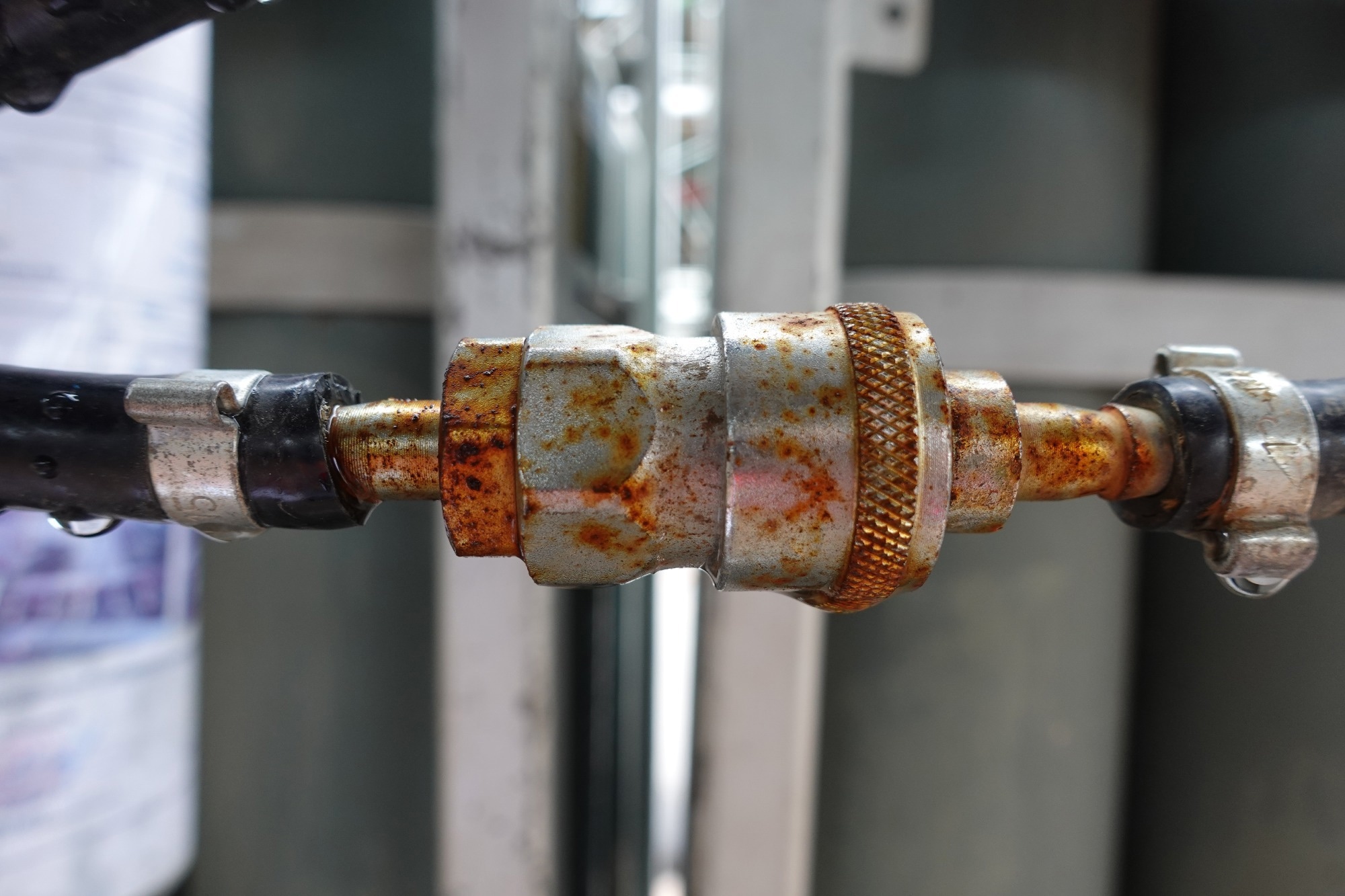 Study: Nanostructure and Corrosion Resistance of Plasma-Based Low-Energy Nitrogen Ion Implanted 17-4PH Martensitic Stainless Steel. Image Credit: chara_nique/Shutterstock.com
Improving corrosion resistance is one of several key challenges in materials science, and is particularly important for components used in nuclear power plants, aerospace systems, and petrochemical facilities.
A new study published in Nanomaterials reports that a carefully controlled plasma-based nitrogen ion implantation process can significantly strengthen the corrosion resistance of 17-4PH martensitic stainless steel, provided the treatment temperature is precisely optimized.
The research focuses on plasma-based low-energy nitrogen ion implantation (PBLEII), a surface modification technique that alters only the outermost layer of the material.
By carefully tuning processing temperature, researchers identified a narrow performance window in which corrosion resistance improves dramatically, before declining again at higher temperatures.
Get all the details: Grab your PDF here!
PBLEII introduces nitrogen ions into the steel surface within a controlled plasma environment, forming a nitrided layer while preserving the alloy’s bulk microstructure.
Treatments were performed at 350-550 °C for 4 hours using an electron cyclotron resonance microwave plasma system, with a nitrogen ion current density of 0.8 mA/cm2.
The process produced a nanocrystalline nitrided layer whose thickness increased from approximately 11 μm at 350 °C to 27 μm at 550 °C. Surface nitrogen concentration rose from 29.7% to 33.1 % over the same range.
As temperature increased, nanocrystalline grain size coarsened from roughly 2 nm to 15 nm, and chromium nitride (CrN) precipitation became more pronounced.
These microstructural changes proved critical in determining corrosion performance.
Corrosion Resistance Peaks at 450 °C
Electrochemical testing in a pH 8.4 borate buffer solution revealed a clear trend. Corrosion resistance improved steadily between 350 °C and 450 °C but declined when the temperature rose any further.
At 450 °C, the material achieved optimal performance. The corrosion potential (Ecorr) increased to -169.4 mV (SCE), compared with −371.6 mV for untreated steel.
Passive current density (Ip) dropped to 0.5 μA/cm2 from 2.3 μA/cm2. Polarization resistance (Rp) reached 4.68 × 10⁵ Ω cm2, more than doubling the value of the unmodified alloy.
These observed improvements are linked to the formation of a nitrogen-rich nanocrystalline γ′N phase. Interstitial nitrogen accelerates passivation and stabilizes the protective oxide film that forms on the steel surface.
However, the benefit is limited; at 500-550 °C, corrosion resistance deteriorates.
Excessive CrN precipitation and partial decomposition of the γ′N phase depleted chromium and nitrogen from the solid solution, weakening the passive film.
At the same time, grain coarsening reduced fast diffusion pathways for oxygen inward diffusion and metal outward migration – processes essential for forming a dense, protective oxide layer.
The results show that higher temperatures do not necessarily yield better corrosion protection.
Explaining The Mechanism
To clarify the underlying behavior, the researchers applied the point defect model (PDM), a framework that describes how defects within passive films govern corrosion resistance.
Mott-Schottky analysis showed that nitriding reduced both acceptor defects (cation vacancies) and donor defects (anion vacancies and cation interstitials) within the passive film.
The 450 °C treatment produced the lowest charge-carrier densities and the highest polarization resistance, indicating a denser, more stable protective layer.
According to the model, interstitial nitrogen plays a dual role. It neutralizes hydrogen ions in solution, slowing passive film dissolution, and it reduces vacancy-related defects inside the oxide film, suppressing degradation pathways. The combined effect strengthens the film’s barrier properties.
Method to Strengthen Industrial Components
The findings are particularly relevant for industries operating in aggressive environments. In nuclear systems, improved corrosion resistance could extend the service life of hydraulic and structural components exposed to borate-containing water.
Aerospace and petrochemical sectors may also benefit from enhanced durability without sacrificing mechanical strength.
The study identifies an optimal processing temperature rather than a simple “more is better” relationship. Engineering applications will therefore depend on careful control of nitriding conditions to balance beneficial nitrogen incorporation against detrimental phase precipitation.
Future research will likely examine long-term durability under service conditions, refine implantation parameters, and explore how similar treatments affect other alloy systems.
Journal Reference
Yang, X. et al. (2026). Nanostructure and Corrosion Resistance of Plasma-Based Low-Energy Nitrogen Ion Implanted 17-4PH Martensitic Stainless Steel. Nanomaterials, 116024. DOI: 10.3390/nano16030215
